
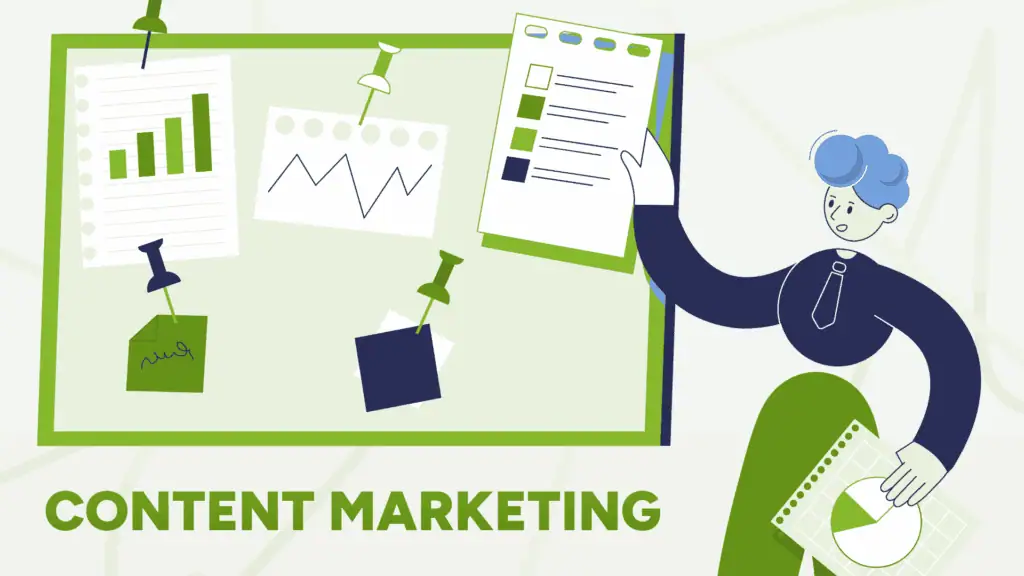

You want to start creating content for your business. Sounds easy, right? Just smash out a blog, slap it on your website and wait for the customers to roll in. If only it were that easy…
Content marketing isn’t about tossing words into the void and hoping for the best. It’s about creating stuff people actually care about. Think of the last time you Googled something, landed on a blog that answered your question perfectly, then disappeared from the site without a second thought. It happens way more than you might think.
And that’s the thing. Just because someone reads your blog doesn’t mean they’re ready to get in touch right then and there. Content marketing is about playing the long game. It keeps you present through the entire customer journey: building awareness, building trust, and being there again when they’re finally ready to take the next step.
So, how do you create a content marketing strategy? We’re here to break it down.
Table of Contents
ToggleTL;DR (Too Long; Didn’t Read) 👇
- A good content marketing strategy starts with clear business goals, because without them you’re just throwing ideas around and hoping they land.
- Don’t ignore what you already have. Old blogs or guides can often be refreshed and made more relevant again, saving you a bunch of time and effort.
- Content only works if you speak to the right people, so get to know your audience and write in a way they’ll actually respond to.
- Keep an eye on your competitors and the keywords people are searching for. This shows you where the gaps are and how you can do it better.
- Content marketing is never “complete”. Publish, track, and adjust as you go, and your strategy will only get stronger.
Creating a strategy that aligns with your business goals
Content hits harder when it’s tied to what you actually want for your business. Writing blogs with no plan or purpose is just spinning your wheels without getting anywhere. The first step is getting clear on what matters most. Ask yourself:
- Do I want more people landing on my site?
- Do I want more media coverage?
- Do I want to reach my customers through email?
- Do I want more brand awareness?
These questions might feel obvious because the answer is usually yes to most of them. But you can’t spread yourself too thin, and you also can’t expect a single blog post or email to deliver results on its own.
The best strategy is one that balances these goals without narrowing your options. A blog post can bring more clicks (if it’s actually helpful, of course), and emails can get you into your customers’ inboxes. The bigger question is: what’s the right mix for your business, and how do I create a content strategy that will actually drive growth?
1. Set your goals and objectives 🎯
As we just mentioned, your business goals are what drive every part of your marketing forward, and content is no different. If you’re chasing a spot in the local news, you’ll want a digital PR campaign that jumps on a trending story.
If more enquiries are what you’re after, an EDM (email direct marketing) campaign is a smart way to slide into the inbox of people who already care about what you do.
Want your brand stuck in people’s heads? Regular blogs and social posts will do the trick.
This isn’t the kind of step you make up as you go. Take the time to figure out what you actually want, weigh up the best way to get there, and then put a plan in place to make it happen. A bit of clarity now saves you a whole lot of time (and money) in the long run.

2. Look at your current content 📂
Before you start pumping out shiny new stuff, have a proper look around at what you already have. You might be surprised at what’s sitting there gathering dust on your website. Maybe there’s a blog that once pulled in traffic but hasn’t seen love in years, or a media release that just needs a bit of updating to make it newsworthy again.
The good news is you don’t always need to start from scratch. Sometimes a little polish is all it takes to bring content back to life. Update the info, tweak the keywords, give it a stronger headline and it can start performing again. On the flip side, if a piece is completely out of date, irrelevant or just plain boring, it’s better to ditch it than waste energy trying to bring it back.
Doing a quick audit shows you what’s performing best, what’s dead in the water, and where the gaps are that you can now fill. Once you’ve worked that out, knowing what to create next is a whole lot easier.
3. Identify who you are speaking to 🗣️
Content only works if it speaks to the right people. If you don’t know who they are, you’re basically talking to no one and wasting good effort.
Get clear on who you want to reach. It could be families making household decisions, tradies who want straight answers without the fluff, small business owners juggling a dozen things at once, or online shoppers looking for the quickest deal.
Each group comes with its own habits, challenges and ways they prefer to take in information. Some will skim a blog on their lunch break, others will watch a quick how-to video, and plenty love a checklist they can keep handy.
When you know your people, your content feels more personal. It’s not generic, it’s not guesswork, it’s relevant and is actually useful for those who read it.

4. Analyse competing content and find gaps you could fill 🔎
Once you know your goals and who you’re talking to, it’s worth having a stickybeak at what your competitors are up to. Scroll through their blogs, socials and media mentions. You’ll spot the topics they recycle, the bits they only half-cover, and the things they’ve completely skipped (sometimes on purpose, but are those the questions people actually want answered?).
This is where you can swoop in and make an impact. Maybe they explain the “what” but skip the “how”. Maybe their content is so out of date that it isn’t even relevant anymore, or they’ve got multiple blogs that kind of say the same thing. This is your chance to give people something better to read.
The aim here isn’t to copy what your competitors are doing. It’s to figure out where you can add more value, answer questions no one else has, or simply explain it in a way that’s clearer and more human.
5. Look into keywords and search terms that you could create content for 🔑
If you want people to actually find your content, you need to know what they’re typing into Google. Keywords aren’t just fancy SEO terms, they’re basically a direct line to your audience and what they’re looking for.
Start by thinking about the questions your customers ask you all the time. Chances are, they’re typing those exact words into the search bar. Then do a little digging and check out the People Also Ask section on Google or scroll down to the related searches to see what else pops up.
The best tip we can share is to spot the terms and questions that matter to your business, and build content around them. It might be a blog answering a common question, a downloadable how-to guide that explains a process, or even a video that clears something up in a minute or less.

6. Choose content formats 🎥
The way you present your content is just as important as the message itself. Blogs are great, but they aren’t the only option. Some people prefer to watch a quick video, others might skim through a checklist or download a guide.
The best format for you depends on who you’re trying to reach and how they like to take in information. A tradie on the go might only have time for a 1-2 minute video, while a business owner might appreciate a detailed guide they can save for later.
Mix it up and see which formats your audience actually responds to. You can even ask them what they’d find more useful (sometimes the simplest way to find out is just to ask). This feedback can go a long way, and changing up your content formats keeps things fresh while helping you connect with your audience, no matter who they are or how they like to engage.
7. Write content that is user-first focused ✍️
The most important thing is to write for people, not search engines. Readers can spot keyword-stuffed copy a mile away, and nothing turns them off faster. We’ve all seen those blogs that repeat the same phrase again and again, and instead of building trust, it does the exact opposite.
The good news is that search engines are a lot smarter than we give them credit for. They now understand context, synonyms and structure, so you don’t need to write content just to squeeze in keywords. What matters most nowadays is that your content is natural, easy to read, and actually beneficial to your audience.
Use keywords as a guide for what to write about, but always put your audience first. Talk to them like real people, answer their questions properly (not just in a way that helps you show up in AI Overviews), and give them something they’ll actually remember.
We’ve got a whole blog on how to write SEO copy naturally, because we’re big believers in keeping it human. Do that, and both your readers and Google are happy.
8. Publish, promote and monitor 📢
Publishing your content is only the starting point. To get real value from it, you need to put it in front of people. Share it on your social media, include it in your emails, repurpose it into smaller pieces and make sure it reaches the audience you want. Leaving it to sit on your website won’t get you far.
Promotion is important, but so is monitoring. Track how your content performs by looking at traffic, clicks, engagement and enquiries. This helps you see what is working well and where adjustments are needed.
The more you share, measure and refine, the more effective your content strategy becomes.

9. Adjust strategy moving forward 🔄
Here’s the truth: no content strategy is perfect straight out the gate. Some pieces will get traction, some will fall flat, and a few will surprise you in ways you didn’t see coming, which is completely normal.
The important part is what you do with that information. If a blog is pulling in traffic, double down and create more like it. Video flopped? Figure out why. Maybe it was too long, maybe it missed the mark, or maybe your audience wants a quick checklist they can save to their camera roll. The point is, you learn by doing, and then you can refine and adjust.
Think of content marketing as ongoing maintenance, not a once-off project. Trends change, people change, and yes, even Google changes (we know that all too well). Publish, check the results, tweak what needs tweaking, and repeat.
Keep adjusting the process and your strategy will naturally evolve, reaching the people who are most likely to choose you and help drive your business forward.

Time to get serious about your content? Let’s talk 👋
We’ll help you build a strategy that earns clicks, trust and results.


