


You’ve probably heard that content is king in marketing. You need good, quality, relevant content that ranks well in search engines, in order to be found when people search for what you offer on Google.
You probably also know that once people get to your content, it needs to be engaging if you want to keep them interested in you and what you offer. You need to demonstrate that you know what you’re talking about to establish your credibility and expertise, and to gain their trust.
You’ll ideally establish yourself as the answer to their problems and questions. So that when they realise they have a your-product-sized-hole in their lives, you’re their go-to.
Because who do you turn to for solutions? The person (or brand) that you know will have the answers, of course.

Then there’s the SEO (Search Engine Optimisation) factors.
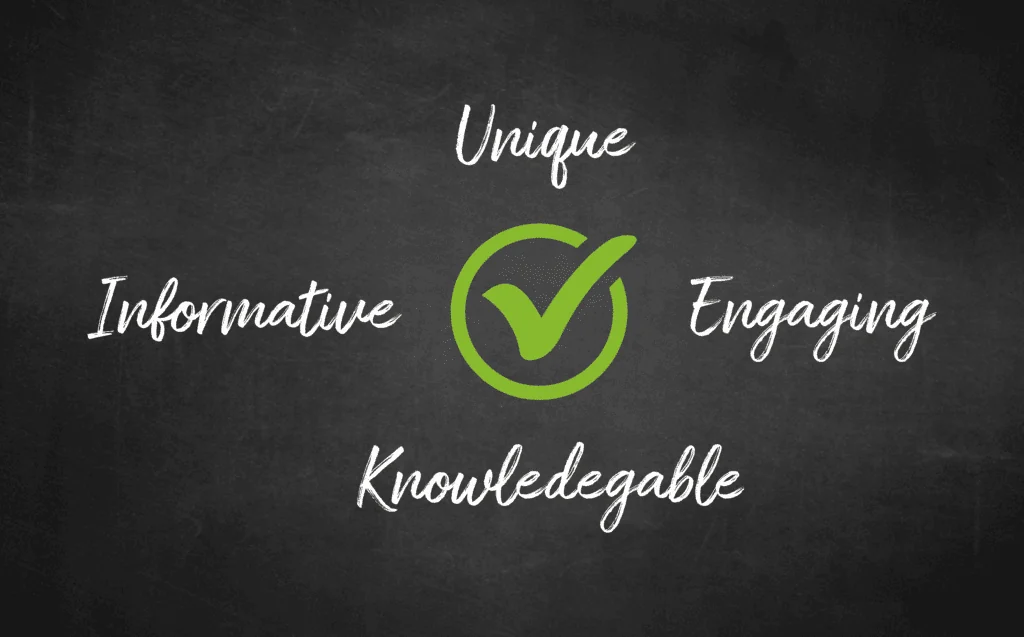
Google favours good, quality content. It favours informative, knowledgeable content. It favours unique content. And it favours engaging content. Site engagement metrics, like how long people spend on your website and its content, what percentage of people ‘bounce’ from your site without engaging, and other factors, tell Google how good your content is.
In December 2022, Google introduced E-E-A-T, adding “Experience” to the long-standing E-A-T framework that was introduced in 2014 Google’s Search Quality Rater Guidelines.
It now looks at four things: Experience, Expertise, Authoritativeness and Trustworthiness. In simple terms, content that shows real, hands-on knowledge tends to stand out more in search.
But it’s one thing to know something is important, and another to know how to do that important thing. And this is where we come in, with some tips on nailing your content marketing.
Here’s how you can create a content strategy, impress the search engines, and the good people all at the same time.
The essentials of high-performing content: Do these. 📌
Be informative and helpful 🤝
It goes without saying, but we’ll say it anyway: contributing something of value to your audience makes them value you. If you want people to buy what you offer, it has to be relevant to them, help them in their lives, solve a problem, or otherwise make them happy in some way. Your content is similar.
Create good, informative and helpful content, and you’ll see many benefits:
- People link to good content. When they link to you, they’re called ‘backlinks’ and establishing high-quality backlinks is a huge SEO factor.
- Established credibility, trust and expertise.
- Goodwill created within your audience.
- Increased brand awareness and recall.
- Site engagement metrics will improve; people spend longer on great content, and this assists your rankings on Google (organic and paid).
- People link to good content. We know we started with this one, but it’s so important we’ll say it again.
Use, and demonstrate your knowledge 💡
Be engaging 📝
What turns a good, informative piece of work into great content is engagement. Take the extra time to make your content engaging, entertaining, and a ‘good experience’ to read. Your engagement metrics (and in turn your SEO results and audience goodwill) will benefit.
Here’s some ways to make your content more engaging:
- Use images and infographics to break up the written content where you can, or simplify a point.
- Be sure to use good structure — headings, sub-headings, etc.
- Use dot-point lists where it makes it easier to read.
- Show your personality, and passion.
- Have fun with it. All the coolest writers do it (like us, right now).
- Use a ‘tone’ where conversational meets helpful and informed. (If this fits your brand).
Be unique 🎉
If you want amazing content, don’t just copy what others have published and rewrite it.
Definitely don’t copy it and not rewrite it.
Unique content ranks better on Google, as it provides insight and value. It also provides more value for your readers, which makes your business more valuable to your readers.
This uniqueness could be a first-hand account of something you’ve experienced and drawn learnings from, a gap you can see in the information that’s largely out there, or a burning question that you know your audience would appreciate the answers to. Basically, unique content that you’ve created yourself, is great. Even better if the putting together of this content requires knowledge, experience or thought.
Content pillars: the epitome of useful content ✅
Content pillars are a key part of content marketing, and great for SEO. While content pillars take work, they provide huge value to audiences, establish a lot of credibility, and perform well on search engines.
“What is a content pillar,” you ask?
A content pillar is basically a comprehensive or all-encompassing piece of content that covers a broad topic, in depth.
This can take the form of:
- One large ‘ultimate guide’ on a topic, which goes into many different elements (and often has internal navigation to jump to the different sections it contains).
- Or, it can be a bunch of separate interrelated and interlinking pieces of content, which usually all connect back to one overarching ‘parent’ article or content piece, which ties them all together.
- This network of content can provide a huge boost for your SEO, for both the broad topic, and the smaller, more in-depth pieces of content.
The main overarching piece of content is often referred to as the ‘pillar content’, while the sub-topics (which branch off into one area of that topic in depth) are often referred to as ‘cluster content’.
When it’s just one large, in-depth piece of content that covers multiple facets of the one main topic, the piece itself is called a ‘pillar content piece’.
It sounds complicated, but the key thing to takeaway are that:
- Content pillars are a comprehensive, deep coverage of a main topic.
- This in depth piece will often connect smaller, related pieces of content to it, to form a network, or take the form of one giant cover-all piece of content.
- They can provide a great user experience (with the right navigation, layout and design)
- They provide huge insight and show your expertise..
- They can be a huge SEO booster.
Examples of content pillars
Here are some examples of content that are, or could be considered, ‘content pillars’.
How to set up your business pages on social media

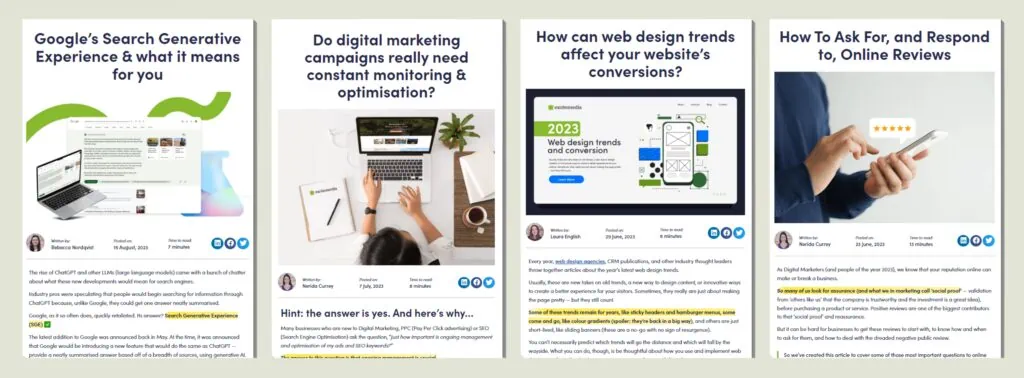
This comprehensive guide is a great example of a content pillar piece (if we do say so ourselves). It’s a great ‘how-to’ resource on setting up social media business pages, some of our best practice tips when doing so, and gives strategic advice related to this topic.
Here’s why it’s great:
- It gives a detailed guide to setting up social media pages (the broad topic or pillar), going into how to do so, and some strategic advice, for each of the main social media channels (the cluster content).
- This is laid out visually in a very user-friendly way, with great structure, and great UX, while covering a bunch of handy information.
- It uses engaging images and infographics for engagement and easy information digestion.
- ‘Jump to’ navigation links (also known as anchor links) at the top of the article let the users jump to the section they need, or read through all, at will.
- The piece features images of visual real-world examples throughout, for the ultimate context.
- It links out to useful external resources referenced within the blog.
- It’s one big, all-encompassing, and very useful piece of content that covers multiple facets of one main topic.
- It’s unique content delivered from the first-hand experience and expertise of our team, using real-world examples.
How to create a killer content pillar strategy ✏️
When you’re looking for the best content pillar strategy for your business, choose a content pillar piece that can be:
- Useful.
- Informative.
- Knowledgeable.
- Within your area of expertise.
- Unique.
- A solution to problems or questions that your audience probably have.
Of course, don’t forget to do your keyword research — to maximise your content piece’s SEO impact.
Then, be sure to plan out your content pillar, what it will include, what the structure will be, how it can most help your audience, and where you can publish or share it. Then, get to writing it. (Don’t forget to apply the ‘essentials of good content’ tips we mentioned earlier).
How to use content pillars to your best advantage 🤔
To get the maximum benefit from your content pillars, be sure to:
- Cross-link within your content to other relevant content.
- Ensure that the design, layout, flow and UX (User Experience) is on-point.
- Create smaller bite-sized content pieces (like social media posts) featuring some of the key, stripped-back insights from your content pillars, and then link to the main content.
- Tie it in with as many mediums as you can — write email campaigns on parts of it, create multiple social media content pieces from it, create videos from it — heck, you can even speak on a podcast about it, delving into some of the points in depth.
- Share it with your audience — the above point isn’t just about getting maximum content out of the work you’ve done on the piece — you’ll want to make sure it’s seen by maximum people. Consider boosting a link to it on socials, create ads going to it, etc. If customers ask your team questions that are answered in the blog, email through the link. How very helpful you’ll seem.
- Update when needed — as information changes, or updates arise, update your pillar content with the new information, to keep it relevant, up-to-date, and high-performing.
Unique data articles: the golden goose for backlinks 🔗
What are unique data articles, you may ask?
We’ll get to that in a moment, but first, it’s important to make sure it’s clear what backlinks are, and why they’re so important for SEO.
Backlinks and SEO
Backlinks play a large part in SEO performance. We mentioned what they are before, but in case you forgot already, backlinks are links from third-party/external websites that point to your website. (Remember it like, they link back to you).
Here’s why good quality backlinks are important:
- They connect you or your website, and the specific page, to the topic and search term/s.
- The links tell Google, this page is useful for people researching this.
- They increase your credibility in Google’s eyes: improving your Domain Authority / Domain Ranking for your website overall.
- They help your website overall, and the page in question.
- The more high-quality backlinks you have, the better for your SEO.
- Backlinks from dodgy websites can hurt your SEO (if you don’t take specific action to reduce their impact).
- Good quality content gains good quality backlinks, and these have great weight on your SEO.
Unique data articles, media releases, and backlinks
Now that we know how important great quality backlinks are, you’re probably wondering: “How do I get others to link to me, organically?”
With unique data articles and a great Digital PR strategy that:
- Presents valuable information.
- Provides something extra.
- And delivers something unique.
What are unique data articles?
Simply put, unique data articles use a business’s own data to present high-quality, factual information that’s worth referencing.
These articles usually include statistical insights, factual observations, or real-world patterns that you’ve gathered and reported on yourself. Once published, this information becomes a resource that others can find and cite in their own content.
When people link back to your findings, it strengthens your credibility across your industry and builds trust with readers who are looking for reliable information.
And here’s the best part: it doesn’t have to stay just on your blog
Unique data articles take a bit of time and research to put together, but can deliver ongoing benefits for your SEO, and therefore for your business.
Unique insights can be used for far more than a single article on your site. Anytime you uncover data, trends or news that others would find valuable, you can shape it into a media release.
That’s Digital PR at its core.
A strong media release built on real data has a far higher chance of being picked up by journalists because it gives them something fresh, factual and ready to report on.
And if your insight isn’t widely known or commonly talked about? Even better.
Whack the data into a media release, send it to a few journalists, and see what comes back. You’d be surprised how quickly a good story travels
We’ve made it happen here at Excite Media.
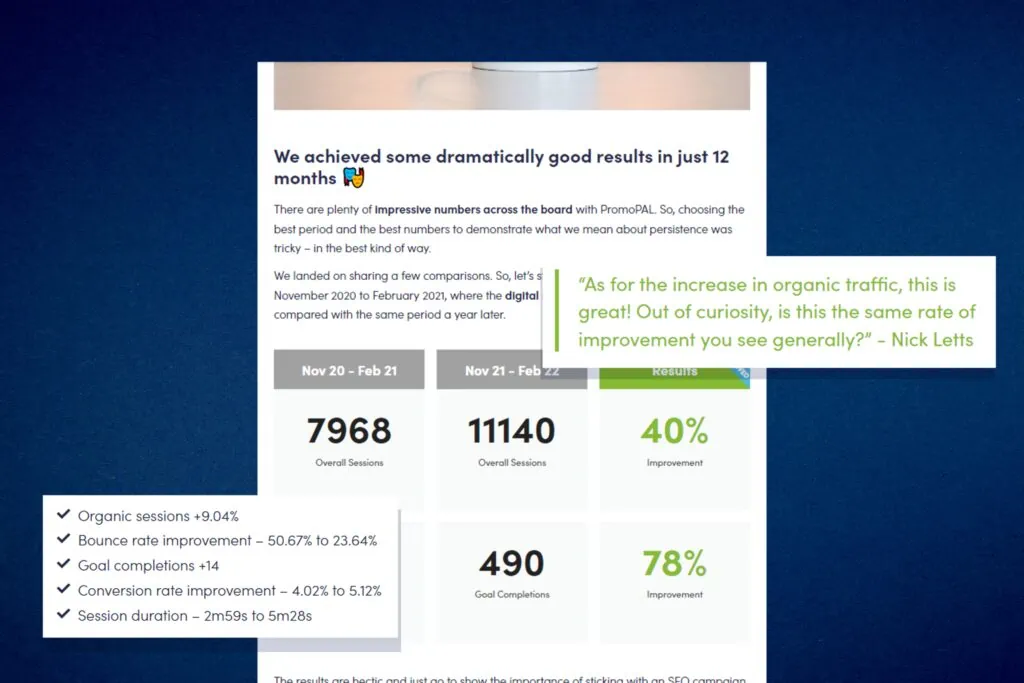
One of our clients had a few interesting stats and observations about their industry, so we shaped those insights into a media release, sent it out, and it was picked up by several journalists, including the Australian Associated Press and The Canberra Times.
The result?
Their authority skyrocketed.
Their name appeared across outlets they’d never reached before.
And they earned backlinks that continue to work in the background long after the release went live.
This is digital PR in a nutshell: real stories, real insights and real outcomes.
Examples of unique data articles 🚀
We’ll use some prominent examples here for clarity, although you can do similar on a smaller scale.
Airbnb and Travel Trends
Airbnb has a news publication where they publish statistics on things like top destinations and travel trends for set periods. This is a smart tactic for them, as, being a travel booking platform, it’s easy (and we assume cheap) for them to gather this information on a large scale.
Countless other websites link to the statistical articles they publish (including many news publications), or quote the stats and cite them with a general homepage weblink.
Even without the links, if your brand name gets mentioned alongside a certain topic a lot (like Airbnb certainly is for travel, accommodation and holidays), Google absolutely sees your brand name as a related term that is relevant for that broad topic and category.
For example, Airbnb’s 2025 travel trends article simply revealed the top categories and destinations — no actual numbers necessary, except for the order of the categories in popularity. Genius. More so because we’ve now just added another backlink to the list, and the linked words include ‘travel trends’ for relevance (which would help).
Dating apps and dating statistics
More great examples of unique data articles in practice are those you’ll find for prominent dating sites and apps. Bumble is one dating app that is great at this. And their stats are all about the numbers, adding to their citability.
For example, this Bumble article here would be relevant for a large number of searches based around dating statistics, fertility, the efficiency of their platform, and what people ‘looking for love’ on apps are saying.
What’s so very smart about this example:
- The statistics presented are things that the app users are very likely to be interested in, or actively searching the answers to.
- They also happen to strengthen Bumble’s value proposition, credibility, and authority
- They presenting a compelling case for the potential users to download and use the app,
- They present Bumble factually as a solution to a key problem that many dating app users complain about.
- And, with all this, they generate a lot of backlinks and citations, while also providing a relevant result for related search terms.
Is this giving you ideas for how you can do something similar in your own business, minus the topic of dating?
How to create great unique data articles ✍️
The best unique data articles are:
- Related to your industry and product/service offering.
- Relevant and useful for your audiences and target markets.
- Help present you in a good light, without seeming like an advertisement, or biased towards you (big names like Bumble can get away with this more, when their brand name is synonymous with the topic at hand, but it’s best to keep it credible as possible. Some people won’t notice, but the further you push it, the more people that will).
- Factual, with a large enough sample of people / data used.
- Fair, and not likely to be skewed due to shared characteristics of a population, unless it’s relevant (interviewing Brisbane business representatives is likely an accurate representation for a B2B business in Brisbane, but not when talking about general population statistics unrelated to business or Brisbane).
- Detailed enough about how the results were gathered, and who the ‘sample population’ were, so readers can understand the credibility and any factors that may skew the data, or make it more relevant (Like “in a survey of 500 business owners in Brisbane”).
In order to create unique data articles, consider ways that would be appropriate to get an accurate measure of facts, based on enough ‘data’ or ‘people’, and that is easy enough for you to gather.
For example, you could:
- Use survey tools like Survey Monkey.
- Pay a market research company to assist.
- Collaborate with another key player in your industry for a co-branded survey or report that you both publish the results of.
- Use data from your user base or system, if your business has this (being sure to protect your customer’s sensitive data and not breach any data protection laws).
- Ask clients and customers directly, recording the responses.
- Use first-hand experience examples, using numbers.
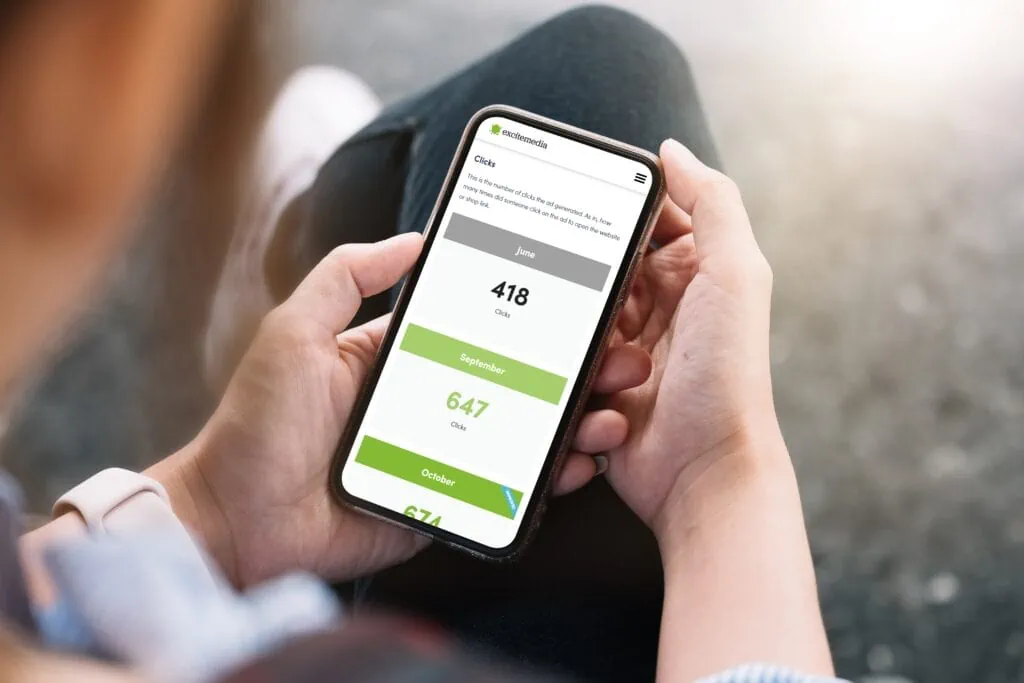
- Use performance data you generate within your own business.
It really depends on your specific business, but a good rule of thumb is whatever will give good, factual answers or insight, and that is unique.
How to enhance the performance of your unique data articles 📈
To enhance the performance of your unique data articles, be sure to:
- SEO optimise these articles, without sacrificing their quality.
- Provide enough information so it’s clear they are genuine and credible.
- Share them —- via social media, affiliates and partners, email campaigns, customers, team members, and cross-link them wherever relevant.
- Update them when needed.
- Cross-link related pages on your site so journalists and readers can explore the bigger picture.
In summary, remember: great content gets backlinks, engagement, and kudos 👏
Great content effectively communicates your brand’s authority on a topic, improves your SEO, and provides an excellent user experience. It gets shared by others because it’s valuable, further improving your SEO. And it creates goodwill within your audience.
Need help with your content? We’d love to chat 👋


